Animify
The AI anime art landscape in 2026 looks radically different from what it was just twelve months ago. What began as a novelty — feeding photos into models that painted them in broad anime strokes — has matured into a sophisticated creative ecosystem where artists, content creators, and businesses are building entire visual identities around AI-generated anime imagery. The pace of change has been so rapid that even people working in the space full-time struggle to track every development.
This article maps the five most important trends shaping AI anime art in 2026. Whether you are a digital artist looking to incorporate AI into your workflow, a content creator hunting for the next engagement lever, or a business evaluating AI art tools for marketing, understanding where the technology is going will help you make smarter decisions about where to invest your time and money.
1. AI Video and Animation Are Crossing the Threshold
For the past two years, AI image generation dominated the conversation. In 2026, the story is shifting to video. The first wave of AI anime video tools — capable of turning static images into short animated clips with consistent character motion — has arrived, and while the results are still rough compared to hand-drawn animation, the trajectory is unmistakable.
 AI video tools are beginning to transform static anime art into short animated sequences — still early-stage but advancing rapidly
Several startups have demonstrated tools that generate 3-5 second anime sequences from a single keyframe image. Mouth movements synchronize with audio, hair and clothing sway with simulated physics, and camera pans add cinematic depth. The output quality does not yet rival professional animation studios, but for social media content — where the bar for animation quality is lower and the demand for volume is high — these tools are already viable.
What makes this trend significant is not the current quality but the rate of improvement. Video models are following the same exponential curve that image models traced from 2022 to 2024. The AI anime videos being produced today look roughly like the AI anime images of early 2023 — promising but inconsistent. If the pattern holds, by late 2026 or early 2027, short-form AI anime clips will be indistinguishable from hand-animated content to the average viewer.
For creators, the practical takeaway is to start experimenting now. The tools are affordable, the learning curve is manageable, and the first-mover advantage on platforms like TikTok and Instagram Reels — where short anime clips consistently outperform static posts — is still available. Start with still-image generation on a platform like AnimifyAI to build your visual style, then layer in video as the tools mature.
2. Higher Resolution Models — 4K Is Becoming the Standard
Resolution has been a quiet battleground in AI image generation. Early diffusion models topped out at 512x512 pixels — usable for thumbnails but useless for anything destined for print or large-format display. The jump to 1024px was meaningful, and the subsequent leap to 2048px made AI art viable for social media and digital displays. But 2026 is the year 4K (4096px) becomes the expected baseline for serious AI art tools.
Several factors are driving this shift. First, upscaling technology has improved dramatically: modern AI upscalers do not simply interpolate pixels but actually infer missing detail, adding plausible texture, lighting nuance, and edge definition that the base model did not produce. Second, GPU memory and inference efficiency have advanced to the point where generating at higher native resolutions is economically feasible at scale. Third, and perhaps most importantly, user expectations have simply risen. Creators who two years ago were thrilled by any AI-generated anime image now expect results sharp enough for commercial printing.
The practical difference between a 2048px image and a 4096px image matters most in three contexts: print-on-demand merchandise (where 300 DPI at meaningful sizes requires at least 3600px on the long edge), large-format displays, and professional design work where images will be cropped or manipulated. If you are using AI anime art for any of these purposes, 4K output is not a luxury — it is a necessity. See our pricing plans for 4K-capable generation options.
3. Style Fusion and Hyper-Personalization
The early era of AI anime generation was defined by broad, recognizable style buckets: "Ghibli style," "cyberpunk," "Shinkai aesthetic." In 2026, the trend is toward fusion and customization. Users are no longer satisfied with generating images in a single named style — they want to blend influences, specify fine-grained parameters, and create outputs that feel uniquely theirs.
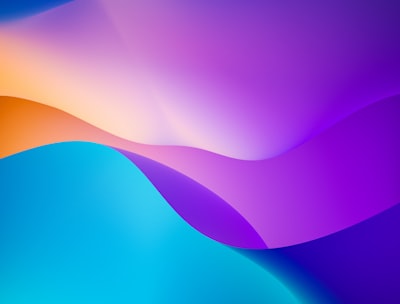 Style fusion blends multiple anime aesthetics into entirely new visual languages
This manifests in several ways. Some tools now support "style mixing" — for example, combining the warm watercolor palette of Ghibli style with the neon lighting of cyberpunk anime to produce something that references both traditions without belonging entirely to either. Others allow users to upload reference images that the AI then uses as a creative anchor, producing output that matches the mood, color palette, and composition of the reference while applying it to new subjects.
The most sophisticated tools in this category support "style transfer at scale" — applying a consistent custom aesthetic across dozens or hundreds of images. This is particularly valuable for brands and content creators who need visual consistency across a large body of work but do not have the budget for a human illustrator to maintain that consistency manually.
For individual creators, the practical recommendation is to develop a personal style signature rather than relying on whatever the default outputs look like. When every creator has access to the same AI models, differentiation comes from how you combine the tools — not which tools you use. Experiment with different style combinations on multiple style pages until you find a look that is identifiably yours.
4. Mobile-First AI Art Tools Are Eating the Desktop
Throughout 2025, the majority of AI image generation happened on desktop or through web apps accessed via laptop. In 2026, the balance has tipped: more AI anime art is now created on mobile devices than on desktop computers. This shift has significant implications for tool design, user behavior, and the kind of content being produced.
Mobile-first AI art apps have solved several problems that held back earlier mobile attempts. On-device inference — running the AI model directly on the phone's neural engine rather than in the cloud — has become viable for certain tasks, reducing latency and eliminating the need for a constant internet connection. The user interfaces have also improved: the best mobile AI art tools now feel as polished as any consumer photo app, with gesture-based controls, live preview, and one-tap sharing to social platforms.
This mobile shift matters for two reasons. First, it dramatically expands the potential user base — there are billions of smartphone users and perhaps a few hundred million people who regularly use desktop creative software. Second, it changes the type of content people create. Mobile-first creation tends to be faster, more spontaneous, and more social-media-oriented. The AI anime art being produced on phones skews toward profile pictures, story content, and quick-to-consume transformations rather than labor-intensive illustration projects.
Look for AI anime tools that offer a seamless mobile experience. The ability to capture a photo, generate an anime version, and post it to Instagram — all within a single workflow on the same device — is the new baseline expectation.
5. What These Trends Mean for Creators in 2026
Taken together, these trends paint a picture of an ecosystem that is maturing rapidly. AI anime art is no longer an experimental curiosity — it is a production-ready creative medium with professional applications across social media, marketing, merchandising, and entertainment.
The creators who will benefit most from these trends share a few characteristics. They treat AI as a creative partner rather than a replacement — using the tool to handle repetitive technical work while applying their own taste and judgment to the output. They stay curious about new capabilities without chasing every shiny object — testing new tools as they emerge but building their workflows around reliable, production-grade platforms. And they understand that differentiation in an AI-saturated world comes from vision, not from technology.
If you are looking to future-proof your creative practice, the single most important investment you can make is in developing a distinctive visual sensibility. The AI tools will keep getting better — that much is certain. What will distinguish your work from everyone else's is not whether you used the latest model, but whether you had a clear idea of what you wanted to create in the first place. Start by exploring different anime styles on AnimifyAI's generator to understand what resonates with your aesthetic instincts, then build from there.
The Road Ahead
The second half of 2026 will likely bring developments that make today's tools look primitive. Real-time AI anime filters for live video, interactive anime avatars for streaming, AI-assisted comic and manga generation with coherent multi-panel storytelling — these are not science fiction; they are active areas of research and development with working prototypes already in limited testing.
The window for establishing yourself in this space is still wide open. The tools are accessible, the audience is growing, and the creative possibilities are expanding faster than most people realize. The question is not whether AI anime art will become a major creative medium — that question has already been answered. The question is what you will make with it.
Ready to start creating? Try AnimifyAI's free anime generator — upload any photo, choose from 6 professionally curated anime styles (Ghibli, Shinkai, Ukiyo-e, Cyberpunk, Watercolor, Chibi), and see your image transformed in seconds. No signup required, no watermarks, and commercial-use licensing available on our plans. The trends are clear — the only thing missing is your creativity.