Animify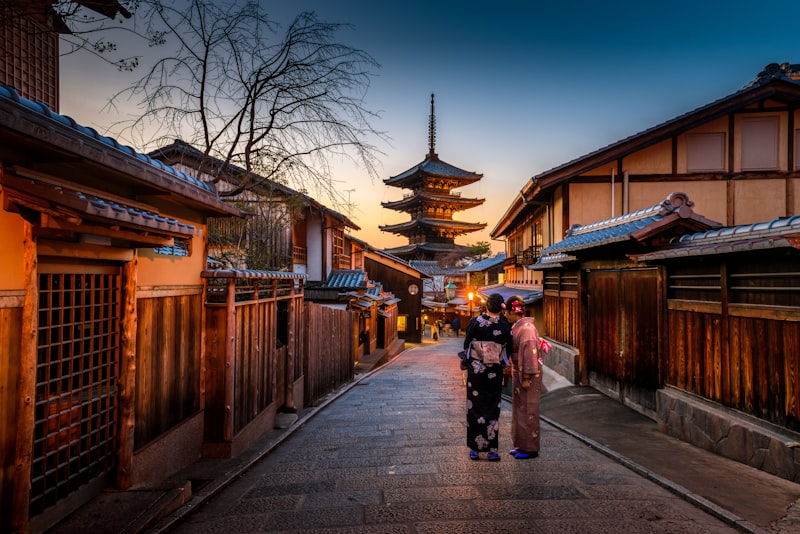
Ukiyo-e — the iconic Japanese woodblock print tradition that flourished during the Edo period (1603-1868) — has shaped global visual culture more profoundly than almost any other art movement. From Hokusai's The Great Wave off Kanagawa (arguably the most reproduced image in art history) to Hiroshige's lyrical travel series The Fifty-Three Stations of the Tokaido, Ukiyo-e established a visual vocabulary — bold outlines, flat areas of vibrant color, dramatic compositions, stylized depictions of nature — that influenced the Impressionists, inspired modern manga and anime, and continues to resonate in contemporary design.
Now, artificial intelligence is giving this centuries-old art form a new lease on life. The Ukiyo-e digital art style available in modern AI anime generators allows anyone to transform their personal photos into images that evoke the graphic power and cultural depth of traditional Japanese woodblock prints. This guide explores the history and visual language of Ukiyo-e, explains how AI adapts this complex traditional art form to photo transformation, and provides practical guidance for getting the best results.
What Is Ukiyo-e? A Brief History
The term "Ukiyo-e" (浮世絵) translates literally to "pictures of the floating world" — referring to the pleasure districts, kabuki theater, and entertainment culture of Edo-period Japan. Ukiyo-e prints served as both art and popular media, depicting kabuki actors, beautiful courtesans, legendary landscapes, and scenes from folklore.
The production of an Ukiyo-e print was collaborative, involving four specialists: the artist (designer), the carver (who cut the design into wooden blocks — one per color), the printer (who applied pigment and pressed paper), and the publisher. A single print could require dozens of separate woodblocks, each carved with extraordinary precision and printed in perfect registration. This multi-block process directly shaped the visual aesthetic: flat color areas rather than gradients (because each color needed its own block), bold outlines (to help maintain registration and prevent color bleed), and intentionally limited palettes (constrained by practical and economic factors).
The Visual Language of Ukiyo-e
 Bold silhouettes and dramatic compositions are hallmarks of the Ukiyo-e aesthetic
Bold, Uniform Outlines
The most recognizable Ukiyo-e characteristic is the strong black outline (sumi) that defines every form. Unlike the soft linework of watercolor anime, Ukiyo-e outlines are confident, uniform, and structurally essential — the bones of the image within which everything else exists.
Flat Areas of Color
Ukiyo-e does not use gradients, shading, or atmospheric perspective. Color appears in flat, unmodulated blocks. Visual depth comes through composition, not tonal modeling. This gives Ukiyo-e its characteristic graphic, poster-like quality. The practical reason for this flatness — each color required a separate hand-carved woodblock — paradoxically produced one of the most influential visual conventions in art history, later echoed in everything from comic books to modern vector illustration.
The Traditional Palette
The classic Ukiyo-e color scheme: indigo blue (from the indigo plant), vermilion red (from cinnabar), ochre yellow, muted greens, and the natural off-white of washi paper. Later masters like Hokusai expanded this with Prussian blue. The palette remained intentionally limited — a feature of the medium, not a limitation.
Dramatic Composition and Stylization
Ukiyo-e artists were masters of composition — dramatic angles, asymmetric balance, and bold cropping that anticipated modern photography by centuries. Nature was stylized into rhythmic, patterned forms that were simultaneously representational and decorative. This balance between observation and stylization is the essence of the aesthetic.
How AI Recreates the Woodblock Aesthetic
Translating Ukiyo-e into an AI style is uniquely challenging because the aesthetic is defined by constraints — flat colors, bold outlines, limited palette — that are the opposite of what AI models naturally produce (gradient-rich, photorealistic output). AnimifyAI's Ukiyo-e prompt explicitly constrains the model: bold uniform outlines, flat color areas, the traditional indigo-vermilion-ochre palette, and graphic poster-like quality. The result transforms photos by simplifying them into their graphic essence — not filtered, but reimagined.
Best Photo Types for Ukiyo-e Transformation
Strong, Simple Compositions
Ukiyo-e rewards compositional clarity. A photo with a clear, dominant subject against a readable background works far better than a chaotic, detail-rich image. Think of Hokusai's Great Wave — one subject (the wave) against one background (sky and Fuji). That level of clarity is what to aim for.
Architecture and Landmarks
Buildings have clean edges that translate naturally into bold outlines. Temples, bridges, towers, and traditional architecture give the AI clear forms. Hiroshige built his career on architectural subjects — modern architectural photography follows in that tradition.
Nature With Strong Forms
Water features, mountains, distinctive trees, and dramatic skies produce excellent Ukiyo-e transformations. A generic field of grass will not read well. A lone pine silhouetted against a dramatic sky will read beautifully.
Portraits With Clear Silhouettes
Modern portraits work best when the subject has a clear silhouette against a clean background. The AI simplifies facial features into the dignified quality characteristic of Ukiyo-e actor prints.
 Landscapes with strong natural forms and clear compositions yield the most striking Ukiyo-e transformations
Ukiyo-e in Context: When to Choose This Style
The Ukiyo-e style is the most graphically bold, historically rooted, and compositionally demanding of the six anime styles. Choose it when you want your image to feel timeless and classical, graphically powerful, and culturally resonant. Avoid it when you want realism (Shinkai), softness (Watercolor), or cuteness (Chibi).
Practical Tips for Better Ukiyo-e AI Results
Getting authentic Ukiyo-e output from AI requires understanding what the style rewards and what it punishes. Here are concrete tips derived from extensive experimentation:
Simplify before you upload: If your photo has excessive fine detail — intricate foliage, complex textile patterns, busy crowds — the Ukiyo-e simplification process may produce visual noise rather than clean graphic forms. Pre-cropping to emphasize the main subject and reduce background complexity almost always improves output quality.
Embrace the flatness: Some users find Ukiyo-e output "flat" compared to photographic or other anime styles. This flatness is not a flaw — it is the defining characteristic of the woodblock aesthetic. Ukiyo-e communicates depth through composition and color choice, not through gradients or atmospheric perspective. If you want depth through shading, choose Shinkai or Ghibli. If you want the graphic power of traditional Japanese printmaking, embrace the flatness.
Experiment with color expectations: The Ukiyo-e palette is intentionally limited — indigo, vermilion, ochre, muted greens. Photos that are already heavy in these colors will produce output that feels authentically Edo-period. Photos with neon or digital-era colors will be dramatically shifted by the AI into the traditional palette, which can create interesting juxtapositions between modern subjects and classical color schemes.
Ukiyo-e and the Future of Digital Traditionalism
The AI Ukiyo-e style represents something broader than a photo filter — it is part of a growing movement of "digital traditionalism," where centuries-old art forms find new expression through cutting-edge technology. The same impulse that drives people to learn traditional crafts in an age of mass production — the desire for connection to cultural heritage, the appreciation of human-scale artistry — is finding a parallel expression in AI tools that make traditional aesthetics accessible. An AI Ukiyo-e transformation is not an Edo-period woodblock print, and it should not claim to be. It is a contemporary digital artwork in dialogue with a historical tradition — and that dialogue is valuable in its own right. For more on the responsible use of AI in artistic contexts, read our guide to AI art ethics.
The Legacy Continues
Ukiyo-e was always a medium in dialogue with technology — woodblock printing was itself a technological innovation in its time. The carvers and printers of Edo-period Japan were technologists as much as artists, pushing the boundaries of what their tools could achieve. That this centuries-old aesthetic now finds new expression through artificial intelligence is entirely consistent with its history. The tools change — from cherry wood and pigment to neural networks and GPUs — but the visual language endures, and the human impulse to transform everyday scenes into art remains constant across centuries.
For anyone interested in Japanese visual culture, the AI Ukiyo-e style offers something irreplaceable: the ability to participate in a centuries-old artistic tradition using nothing more than a smartphone photo and a few seconds of time. It is not a replacement for studying Ukiyo-e, visiting museum collections, or appreciating master prints in person. It is a doorway — an invitation to engage with one of the world's great artistic traditions in a personal, creative, and immediately accessible way.
Transform your photos with the Ukiyo-e style free on AnimifyAI. Upload a landscape, architectural shot, or portrait with a clean composition and see it reimagined through the graphic power of traditional Japanese woodblock art. Three complimentary transformations, no account required. For more Japanese art styles, explore our Ghibli animation guide and Shinkai cinematic style guide.
Have a photo of a temple, a mountain view, or even just a striking building against the sky? Run it through the Ukiyo-e style and watch bold outlines and flat color transforms your snapshot into something Hokusai might have carved — bridging three centuries of art in ten seconds flat.